
registered electrician

A Guide To Your Fuse Box

In these strange times, we are all spending a lot more time at home and in the garden (if we are lucky enough!)  So we thought we’d give you a mini guide to something we all have in our homes and probably take for granted that they’re keeping us safe.

Fuse Boxes – also known as Consumer Units – are used to control and distribute electricity around our homes.

You probably know where your fuse box is located in your home.  It is important in case we ever need to turn the electricity off in an emergency.

A fuse box contains three things:

  1. Mains Switch

This allows you to turn off the electricity supply, and so should be easily accessible.  Some homes will have more than one mains switch if there is more than one fuse box.

2. Circuit Breakers or Fuses

Most homes built after 1960 will have circuit breakers. These are automatic protection devices that switch off a circuit if they detect a fault.  Despite being a similar size to fuses, they offer more precise protection.  If they “trip”, you can reset the switch after finding and correcting the fault.

Fuses have a piece of special fuse running between two screws.  If a fault occurs, or in the event of an overload, the fuse wire will become hot and melt.  The melted fuse then breaks the circuit, disconnecting it and keeping you safe.

3. RCDs

RCDs (residual current devices) are switches that trip a circuit under certain conditions and disconnect the electricity supply.  If it detects an imbalance in current, or electricity flowing down an unintended path, it will switch the circuit off, reducing the risk of death or serious injury from an electric shock.

If you have a wooden back on your fuse box, a mixture of fuses and circuit breakers, or no RCD protection, then you might benefit from upgrading to a new consumer unit that would offer you more protection.  It is also worth considering if you are planning an extension or an improvement project or your fuse box is overloaded.

A professionally installed consumer unit by a certified electrician will improve your electrical safety as well as put your mind at rest by checking the integrity of the existing circuits in your property.

Fulcher Edwards carries out all types of electrical services, including fuse box replacement in homes in and around St. Albans. Why not give us a call us today for a free quotation on 01923 616985 or drop us an email on our Contact Us Page.
Read more

Electrical Safety In The Home

For the past 38 years we have provided electrical services across Hertfordshire and London. As I’m sure you can imagine, we have encountered some electrical horrors and very near misses over the years! This could be due to incompetent tradesman, electrical DIY, or faulty electrics.

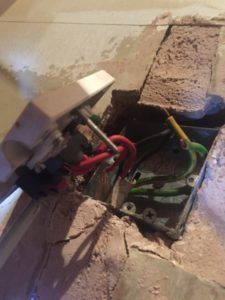
Our most recent discovery was this socket outlet in a house in Kensington. The tradesman who installed the fridge had left the socket outlet in this condition from over 4 years ago! This was highly concerning for our engineer to discover as electrics like this can be fatal. There was risk of electric shock to the resident, but also electrical sockets like this could’ve caused the appliance to become very hot and potentially explode!

Electrical Safety Tips

Electricity was a brilliant discovery for the human race, however its important to be cautious with electricity as it can cause fatal injuries if mishandled. We recommend the following tips to optimise electrical safety in your home:

  1. Always use registered electricians. NICEIC, Elecsa, and NAPIT are UK registering bodies for electrical contractors. They will carry out thorough audits to assess the electrician is competent and works to the highest standard of safety and quality. The electrician will also have to work to the latest British safety Standards.  Electrical Safety First have a register in which you can find a local, registered electrician HERE.
  2. Do not carry out electrical DIY! According to Electrical Safety First, DIY causes half of electric shocks in UK households. The safety factor is a major concern, therefore its best to always use a registered electrician to carry out the works. Many DIY electrical incidences are caused by cutting through a power lead, not turning off electrical devices before working on them, and drilling into wiring. Always seek advice from a professional, and if you’re not sure then do not carry out the DIY works.
  3. Use Part P registered electricians in St Albans. As mentioned above, if you use a registered electrician they are likely to also meet Part P requirements. Part P is a building regulation which ensures the electrical installations within dwellings are safe. Majority of electrical works within a dwelling will be Part P affected. Therefore the works needs to be notified and inspected by a building control body to ensure they meet building regulations.
  4. Have an Electrical Installation Condition Report (EICR) carried out on your property. The EICR will highlight any internal wiring defects, as well as visual defects to your sockets or wiring which could cause a fire.
  5. Have a common sense approach with electricity. Do not overload sockets, do not leave electrical items charging while unattended, and contact an electrician if you notice any visual defects with your sockets or wires.

Its important to treat electricity with the utmost respect. Sometimes you can follow all the above advice and an electrical incident could still occur. However its important to eliminate the risk as much as possible.

Please do not hesitate to contact us HERE for all your electrical needs or for further electrical advice.

Read more