
pat testing london

Portable Appliance Testing (PAT)

Last week we carried out our annual Portable Appliance Testing (PAT) on the business park where we are based. Whether you are a landlord, tenant, homeowner, or employer, appliance testing is relevant to us all. Consider all the different types of appliances you use in your everyday life, and that majority of electric shock fatalities are due to faulty appliances.

What is Portable Appliance Testing (PAT)?
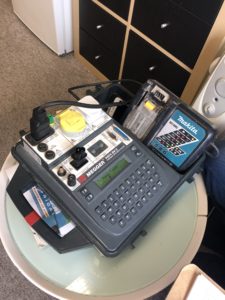
PAT involves visual inspections and electronic tests being carried out on electrical appliances to ensure they’re safe for use and conform to Electricity at Work Regulations. PAT applies to all electrical equipment connected by a plug and socket-outlet.

The inspection will involve the following checks:
1) connections inside a plug are correct and secure
2) the fuse inside a plug is of the correct rating
3) no bare wires are visible other than at the terminals inside the plug and appliance
4) There is no sign of internal damage, overheating or entry of liquid, dust or dirt

Who can carry out my PAT testing?

Electrical Safety First recommends that PAT testing is carried out by a PAT competent engineer, or by an electrician that is registered with an industry recognised accreditation like NICEIC. You can find a local, registered electrician HERE.

The competent person carrying out the testing will use a portable appliance test instrument (pictured above) to check the electrical condition of the appliances. Once testing is complete, you should be supplied with a certificate, and asset register. This is your proof that testing has been carried out, and all items are agreed to be safe. If any of your items fail the testing, the engineer should make you aware of this. Furthermore, electrical appliances which have failed testing should be kept out of use until they are repaired/replaced.

Is PAT testing a legal requirement?

Health and Safety Executive (HSE) legislation states that all employers have a legal obligation to maintain all electrical equipment. Furthermore, many insurance companies now request that PAT testing is carried out. If you are a landlord, as part of the Landlord and Tenancy Act 1985, you are required to ensure that all appliances you supply are safe for continued use. As mentioned above, we all use a number of electrical appliances in our everyday life. Therefore its important to make sure they’re safe! We recommend annual portable appliance testing.

If you would like PAT testing carried out on your premises in St Albans, London or Hertfordshire or would like to find out more information, please do not hesitate to contact us HERE.
Read more

Electrical Fire Safety Week

This week is Electrical Fire Safety Week which is a great initiative promoted by Electrical Safety First. They work closely with the Home Office and Fire and Rescue services across the UK to help raise awareness on the dangers of electrical fires. Statistics they have collected show that “over half of all accidental house fires are caused by electricity. And nine out of ten electrical fires are caused by electrical products.”

At Fulcher Edwards we also consider ourselves to be advocates for electrical safety and put it at the forefront of what we do. Therefore we would like to share with you our tips and advice on how to stay electrically safe at home and in the office!

PAT Testing

PAT (Portable Appliance Testing) ensures your electrical items are safe to use. A PAT testing engineer will carry out visual inspections and tests to confirm the safety of the items. PAT testing should be carried out annually and is particularly important in the workplace or if you’re a Landlord.

EICR 

The British Standards recommended that all homeowners have an EICR (Electrical Installation Condition Report) maximum every 10 years. Offices or rented accommodation should be every 5 years. EICRs establish how safe the electrics are in your building and will identify any potential hazards which could cause a fire. Following the electrician carrying out a thorough investigation, you will receive a report and recommendations which will keep your home in optimum electrical safety.

RCD

We always recommend RCD (Residual Current Device) protection to our customers. If you currently have no RCD protection, this will form as one of the recommendations in the report following your EICR. RCDs are a sensitive switching device that quickly turns off electricity when danger arises to reduce the risk of death or serious injury. RCDs turn off electricity in a fraction of a second and are far quicker and reliable than breakers and fuses.

Tradesman

Quality workmanship is all part of our service here at Fulcher Edwards. We are NICEIC registered electricians which means we will always be compliant to the highest standards of Part P building regulations. If you use an NICEIC registered electrician, you will be sure of a safe standard of work from a person who takes genuine pride in what they do.

Other things to consider:

  • Always turns off electrical items when not in use! If an item if plugged into a socket, turn the socket off and remove the plug to be extra safe.
  • Don’t overload your sockets or extensions leads. We understand that its unrealistic to have a plug socket for each item, however just be aware of putting to many high voltage items in one extension lead as this could result in a fire. Electrical Safety First have a brilliant interactive socket calculator which can be found here.
  • Carry out visual checks. If any cables, sockets, or plugs appear faulty or damaged it is best to contact an electrician.
  • Following on from last weeks blog about counterfeit items, always ensure you’re purchasing legit electrical items. A counterfeit may have not undergone thorough safety checks and therefore it could be faulty or possibly even deadly! Some products will also have the BSI Kitemark  on them which is the recognised symbol for quality and safety.
  • Its always a good idea to not carry out electrical D.I.Y. A simple job which goes wrong could ultimately cause severe and expensive damage. Or even worse it could cause a fire. Therefore it is always best to contact a qualified and registered electrician.
  • If worst comes to worst and a fire does start within your home, make sure your fire alarm is working! We always recommend you check your fire alarms weekly to ensure they’re still working correctly.

Join in with the Electrical Fire Safety Week conversations on twitter with hashtag #EFSW. For all your electrical needs including the ones mentioned above, please do not hesitate to contact us here!

Read more