electric heating installation in London

Efficient Office Heating

January is well and truly here whicoffice heating installer in London, Hertfordshire and St albansh means the cold weather is upon us! I’m sure your office heating is on constantly now but is it efficient?

As per the Carbon Trusts website, Energy is one of the largest controllable overheads in office buildings which means there are many opportunities to make savings. Reducing energy consumption not only saves money but improves working conditions which can increase staff productivity. Furthermore, the environment will benefit from reductions in energy use and carbon emissions which enhances corporate reputation

Energy Advice Courtesy of the Carbon Trust From PCs to vending machines, office equipment of some kind or another is used by almost all UK businesses, and accounts for around 15% of all the electrical energy used in UK offices.It’s an area where huge savings can be made, as effective management of equipment can reduce its energy consumption by up to 70%. Start by focusing on the following three areas:

  1. Upgrade existing equipment
    Technology advances daily. New equipment with better energy efficiency ratings can lead to big savings. Watch the video and see how much you could save by upgrading old monitors. You’ll find advice on a range of equipment in upgrading equipment and systems.
  2. Have an office equipment policy
    Develop a set of guidelines to standardise operations and communicate it. For example: activate stand-by modes on PCs and set up printers to print both sides of the paper (duplex printing).
  3. Maintain equipment
    Well-maintained equipment is more efficient and lasts longer. So set up a maintenance schedule, keep equipment free from obstructions and prevent over-heating by cleaning filters and fans regularly.
Call your local Electrician 
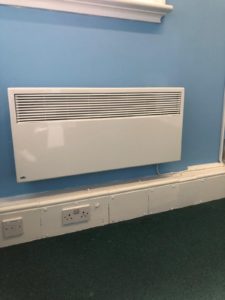
One of our electricians covering St Albans and London recently changed some heaters at a commercial building in Smallford, St. Albans and we are already hearing about the benefits of this Company upgrading their old heaters for new ones.
What else can you do?
Behaviour in the workplace is also another factor, with awareness being given which can help change behaviour in the workplace to reduce unnecessary energy consumption and cut your organisation’s carbon emissions.
If you are thinking of upgrading your heaters then why not contact Fulcher Edwards who can not only provide a free quote but we can discuss your requirements and give you advice that suits your business. You can contact us via our website on the contact us page or by calling 01923 616985.
Read more

Have you heard of Lot 20 Regulations?

With winter truly on its way now, Fulcher Edwards Ltd have been installing more electric heaters for homes and businesses the last few weeks in St. Albans, London and surrounding areas. One thing we have had to make our customers aware is what type of heaters are now available, especially if they are replacing old ones.

From the 1stJanuary 2018 the Lot 20 Regulations came into play which was one of the largest upheaval to the electric heating industry as it changed the amount of available products manufactures could sell. Under the new  Lot 20 legislation, all local space heaters for sale in the EU will have to adhere to these new rules or they can no longer be sold.

So, what does that Lot 20 mean for the consumer? Lot 20 was created so that all energy-using products would have a framework of basic requirements to make them as efficient and environmentally friendly as possible. When you consider the amount of energy we use on a daily basis, it’s easy to see why this legislation is so important.

Electric radiators, infrared heaters and panel heaters are all classed as ‘fixed electric local space heaters’, and they must have at least a 38% efficiency rating if they have a nominal heat output above 250W. Other electric heating solutions such as portable electric space heaters, storage heaters and heaters below 250W, have separate efficiency targets. Efficiency is determined by how many energy saving features a heater has now.

Which provided a helpful breakdown on their website with how compliance is now achieved with heaters available today under the new Regulations;

Portable heaters must have: Mechanic thermostat room temperature control as a minimum.

Optional additional energy saving features: Presence or open-window detection – the heater is equipped with an electronic device that automatically reduces the temperature when no person is detected in the room or if a window is open.

Remote control via an app – control temperature via a companion app on your phone or tablet  Adaptive start control.

This is not something our clients don’t need to worry about as our approved wholesalers and our electricians and staff at Fulcher Edwards know about Lot 20, therefore we can advise you of what is available now and what might be different from your existing heaters.

If you need any advise on a new electric heater installation or would like a free quotation then please get in touch via our online contact form on the website or on 01923 616985. If preferred our email address is info@fulcheredwards.co.uk

electric heating Lot 20 Regulations


Read more

Dont overload your extension lead or wall socket this winter!

Now that the chilly weather is definitely upon us, thoughts are now turning to how we can keep warm over the Winter. Sometimes our heating needs a boost and the electric blankets and electric heaters start to make a return appearance once again.

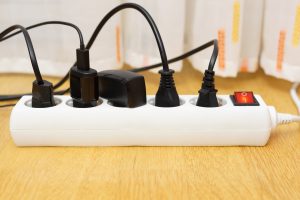
Despite all this, it is mindful that a household electrical system is only designed to cope with so much. Unfortunately increasing numbers of households are overusing extension leads and in some cases actually overloading them with the wrong types of appliances.

What appliances could overload an extension lead?

It is actually smaller appliances such as kettles, toasters, and hair dryers which actually consume far more power than what you might imagine. In fact it is recommended that kettles and toasters actually have their own socket and are not used on extension leads at all. This is because a kettle alone would use the maximum electrical load on a 13 Amp extension lead which renders the rest of the extension lead useless!

Electric heaters can provide a great way of providing quick and effective heat into winter chilled rooms, they are great in a living room when plugged into an extension lead along with a laptop, printer and a router but be wary of using them with a hair dryer. An electric heater and a hair dryer plugged into a 13 Amp extension lead will overload it leading to risk of overheating and fire.

As a general rule, no more than 3000 Watts of energy should be plugged into a 13 Amp extension lead. Of course we don’t expect you to calculate how much energy each appliance uses, just be mindful of more power hungry appliances such as kettles, hair dryers and electric heaters which should ideally have their own socket for your own peace of mind.

What appliances will be ok to plug into an extension lead?

Appliances which consume less power will be better used in an extension lead. Such appliances include televisions, computer monitors, hard drives, laptops, wireless routers, mobile phone chargers, and games consoles etc. Even items which you would imagine might use more power such as electric blankets and hair straighteners are ok to use in an extension lead.

However before you plug in, it is important to check the Amps on your extension lead. We have based our post today on a 13 Amp extension lead. The capabilities of a lower Amp extension lead (like a 5Amp) will be much lower.

There is an interactive socket overload calculator which allows you to find out if you will overload your 13 Amp extension lead with a wide variety of household appliances. Take a look here

Where are extension leads suitable for use?

We recommend that extension leads are restricted to living areas and bedrooms within your home. In kitchens, appliances such as washing machines, tumble dryers and dishwashers would cause a 13 Amp extension lead to overload if more than once appliance was used at the same time. Of course extension leads should never be brought into bathrooms and WC areas in your home.

The Safer Way

In an ideal world, extension sockets should not be used at all. To maintain optimum safety levels in your home, you would plug each appliance into it’s own socket, however we do understand that in living rooms in particular it would not be practical to have a socket for every single thing!

In rooms such as kitchens, it is a good idea to ask a domestic electrician in your area to install extra sockets if you are finding it difficult to manage with what you have. In recent years, there has been increasing demand for additional kitchen sockets, and here at Fulcher Edwards we are often asked to fit additional sockets into our clients home. The installation of additional sockets should always be done by an electrical contractor who will ensure that they are safely installed and tested for your peace of mind.

Conclusion

A good time to consider your household needs for extra sockets is when you carry out home improvements in London and Hertfordshire. Redecorating a home often leads to replacement sockets for something more fitting with the theme. It is a great idea to ask your electrician to install additional sockets if you’re using extension leads currently. In fact all good NICEIC electricians in St Albans will ask you about your current electrical needs to ensure that you have enough electrical sockets.

Give us a call now on: 020 7922 1101 / 01923 616985 or send us a message HERE.

Read more